About Us

Two Legacies. One Combined Vision.

Today, XTA stands as the combined force of two of the UK’s most respected professional audio innovators: XTA and MC² Audio, officially merging in 2007.

We are united by a shared commitment to delivering sonically accurate, uncompromising audio equipment for the global professional market and beyond.

From live touring and high-end installations to broadcast facilities and world-class recording studios, our equipment is designed, manufactured, and trusted to deliver uncompromising performance in the most demanding environments.

POWER | PROCESS | CONTROL

Our approach is simple: let the content take centre stage. Whether it’s music, speech, or film, everything we design is focused on delivering it with clarity, accuracy, and consistency – without compromise.

That thinking runs through every part of the business. From design and component selection to testing and long-term support, the focus remains the same: to build products that perform reliably in real-world environments.

We don’t design to meet specifications – we design to solve problems.
We don’t rely on claims – we rely on what the equipment does in use.

It’s an approach that has remained consistent since the beginning, and continues to shape how we develop products today.

At the forefront for decades

XTA

Like most good stories in audio, ours didn’t begin in a boardroom. XTA and MC² share remarkably similar beginnings – both founded in the early 1990s, driven by a pure passion for audio perfection.

Operating out of a spare room in Worcestershire, XTA began its journey with the design of a single mic splitter. The company was founded by John Austin and Andrew Grayland—both electronics hardware specialists with extensive experience in analogue and digital audio.

Backed by a core team with strong roots in professional audio, XTA quickly progressed into developing state-of-the-art digital signal processing (DSP), signal switching, and distribution.

MC² Audio

Around the same time, in a small business unit in the East Devon countryside, Terry Clarke (co-founder of Klark Teknik) and Ian McCarthy joined forces to establish MC² Audio.

Combining Terry’s renowned design expertise with Ian’s background in Hi-Fi and PA systems, the company was built with a clear objective: to deliver sonically accurate amplification for the global professional audio market.

Two companies. Two parallel paths. One shared obsession with getting audio right.

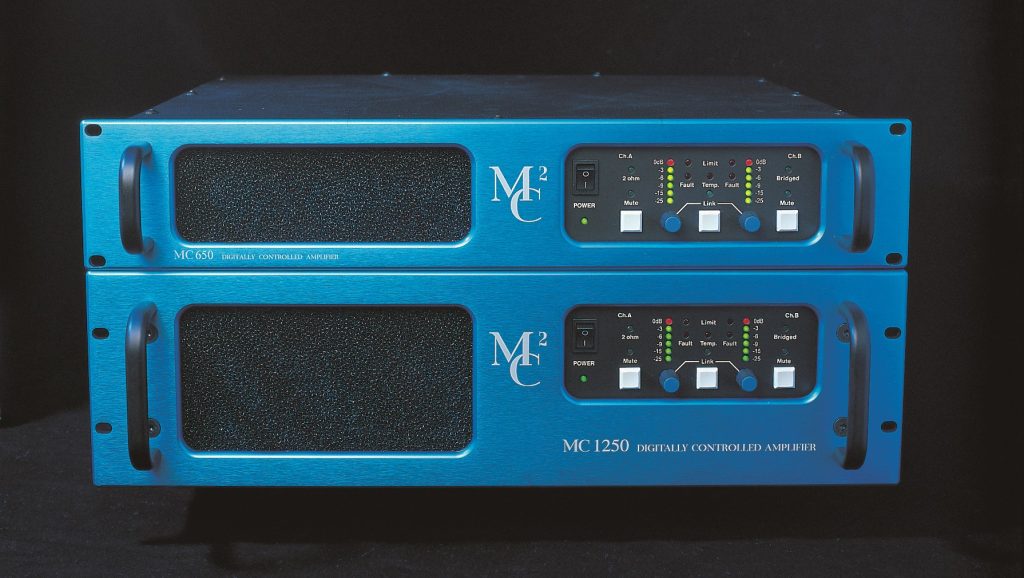
MC² launched the digitally controlled MC Series at AES Amsterdam, setting a new benchmark for sonic quality and reliability in the demanding nightclub and install market.

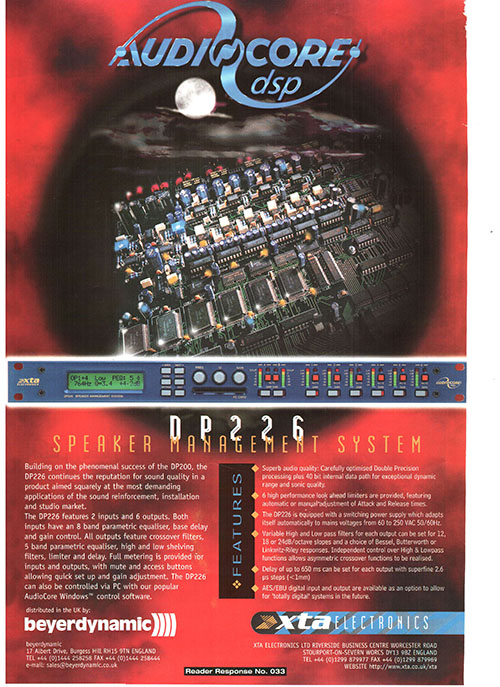
DP226

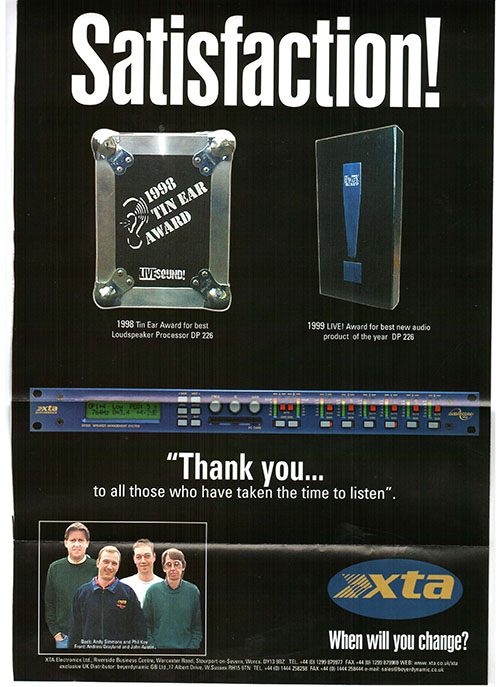
One of the most defining moments in our journey came with the introduction of the XTA DP226.

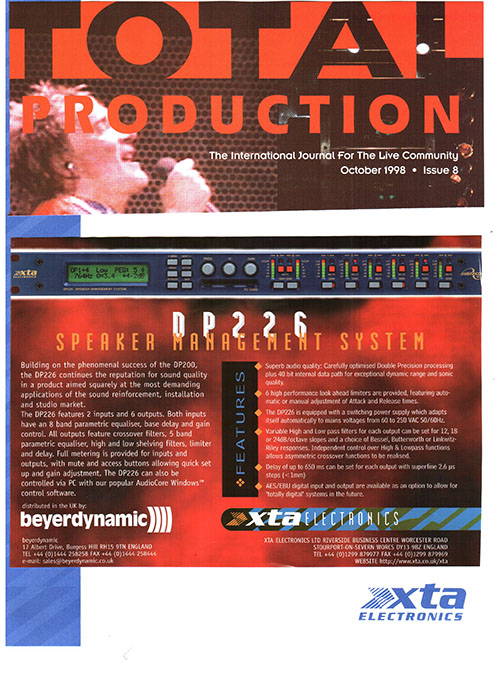
Widely considered a legendary piece of pro audio gear, it was released in the late 90’s as a 2-in, 6-out loudspeaker management system utilising DSP – one that would go on to truly revolutionise pro audio.

Looking at the landscape of live sound today, DSP integrated into amplifiers is standard. But when the DP226 was launched, it fundamentally transformed how sound system engineers tuned, aligned, and protected large-scale PA systems.

See below for more information >>

DP226 front panel view
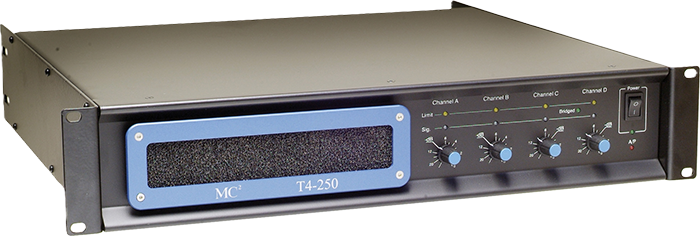
MC2-T4250-power-amplifier_black-with-blue-border

The MC²  T Series debuted at PLASA, bringing flexible, highly reliable power to system integrators for clubs, stadiums, theatres, and houses of worship.

E-Series

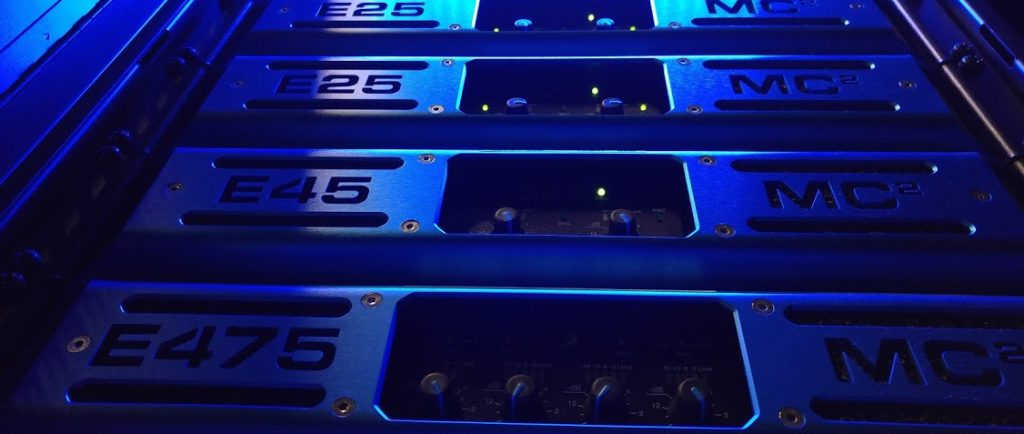
The E-Series was a range of lightweight, high-power, switch-mode amplifiers designed specifically for the rigorous demands of the touring and rental markets. It holds legendary status in the pro-audio world, and from the mid-2000s onward became the industry benchmark.

Building on the stellar reputation of the MC/T Series, E-Series represented a bold leap into the modern touring era. Prolight + Sound Frankfurt 2003 saw the debut of the E15/E25, followed a year later by the flagship E45.

From the unique Class AB floating-drive of the E15/E25/E4-75, to the supercharged Class H of the flagship E45—the entire lineup delivered  incredible warmth and musicality.

The E60/E90/E100 (new class D architecture) were introduced to meet the demands of ever increasing power levels from loudspeakers drive units, whilst maintaining that trademark MC² sound.

In addition, a powerful switchmode PSU guaranteed massive energy reserves, ensuring huge sustained low-end was tight/punchy & delivered in full, with completely uncompressed subsonics, unlike many other amplifiers in the market.

The E-Series wasn’t just popular; it was the gold standard for amplifiers, offering Hi-Fi grade sound across the frequency spectrum.

E-Series was so highly regarded that it was adopted by some of the world’s most prestigious loudspeaker brands such as: Funktion-One | Turbosound | CODA Audio | EM Acoustics | DAS Audio | HK Audio | Ohm

Just like the XTA DP226 changed the way DSP was used and considered in the industry, E-Series did the same for amplifiers – They remain one of the most influential amplifier ranges ever produced.

A Natural Evolution

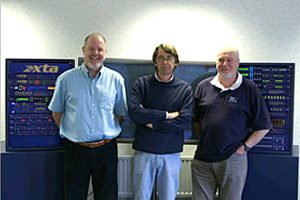
In March 2007, XTA and MC² officially merged, bringing together the expertise of Terry Clarke (Technical Director, MC²) and John Austin (Technical Director, XTA). By combining MC²’s amplification with XTA’s industry-leading DSP algorithms, the newly formed group opened up new possibilities in system design and performance.

The impact of this collaboration was quickly recognised across the industry. Over the years, our engineering team has earned a strong reputation for innovation, with the company proud to include two recipients of the prestigious Gottelier Award.

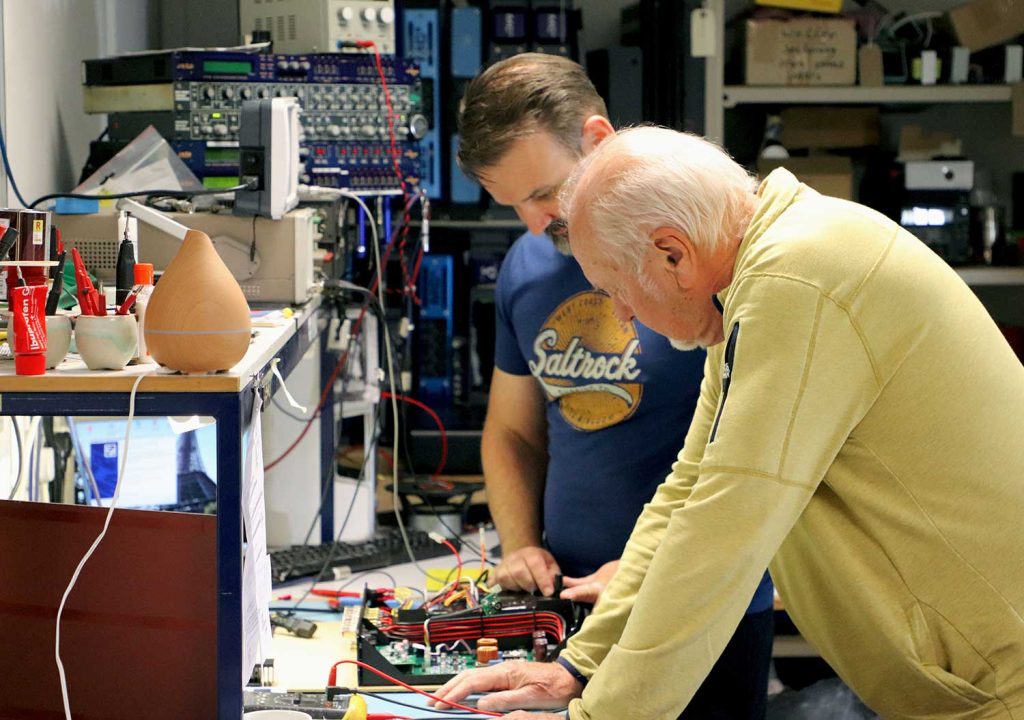
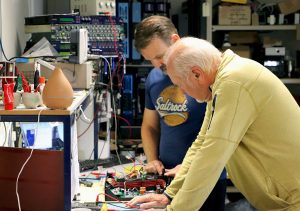
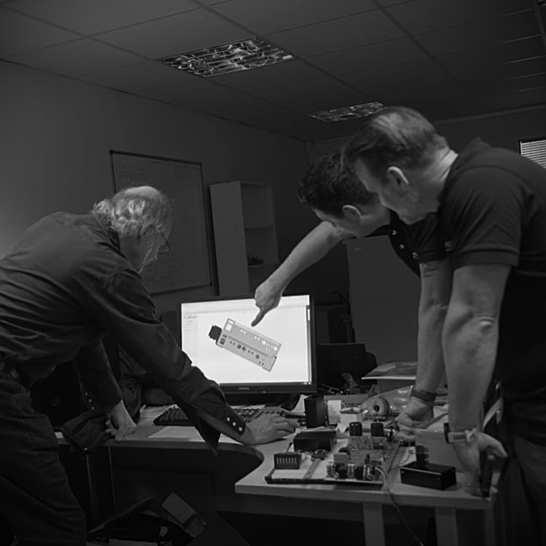
Designers testing XTA equipment on a work bench

S Series & DS8000

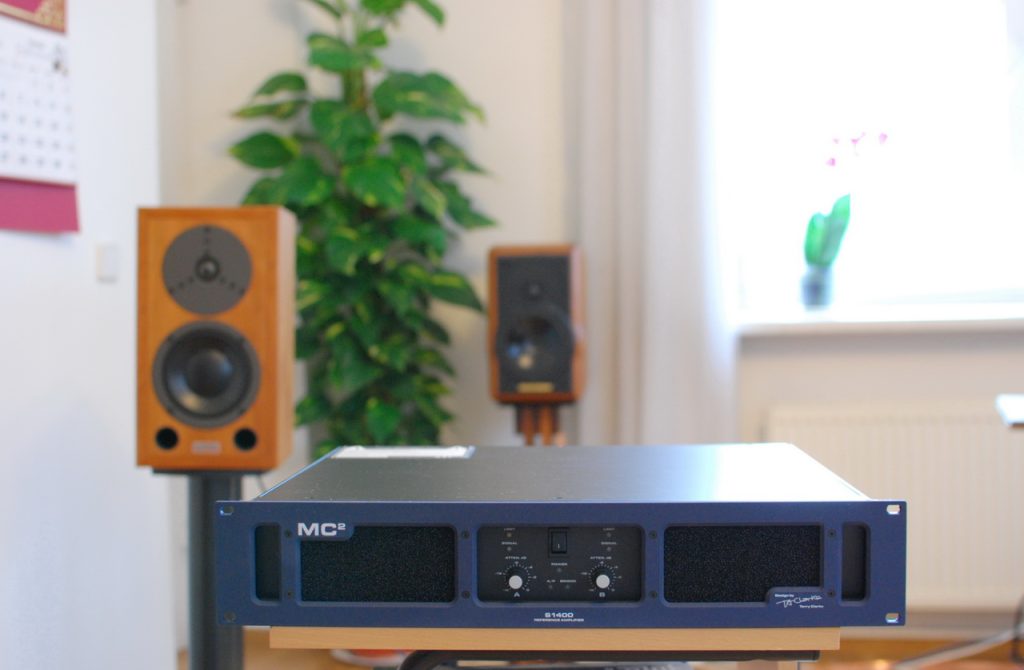
MC² finally discontinued the legendary MC-Series of amplifiers, owing to component supply issue, and a drive to bring in a replacement with some key improvements.  As they were designed in the early 90’s, replacing key elements for newer components/circuity wasn’t an efficient move, so quietly behind the scenes Terry Clarke had been tinkering with stuff…  The S-Series was launched as a direct replacement offering key improvements in performance and also visual aesthetic.  They specifically targeted the upper end of the studio and audiophile market and were an instant hit worldwide, often referred to as Hi-Fi “giant killers”.

Two existing/notable OEM partnerships (both legendary Studio Monitor brands), Quested Monitoring Systems & Dynaudio (under the dynaudioacoustics brand) added S-Series to their portfolios which was a true testament to the products performance.

At the same time, XTA introduced the DS8000 Audio Distribution System. Building on the legacy of the DS400 and DS800, the DS8000 featured custom preamps designed by Gottelier Award winner Alex Cooper. With a Common Mode Rejection Ratio (CMRR) of 120dB, dual redundant power supplies, and straightforward outside broadcast splitting, it became a widely adopted solution for major broadcast and touring applications worldwide.

Delta Series

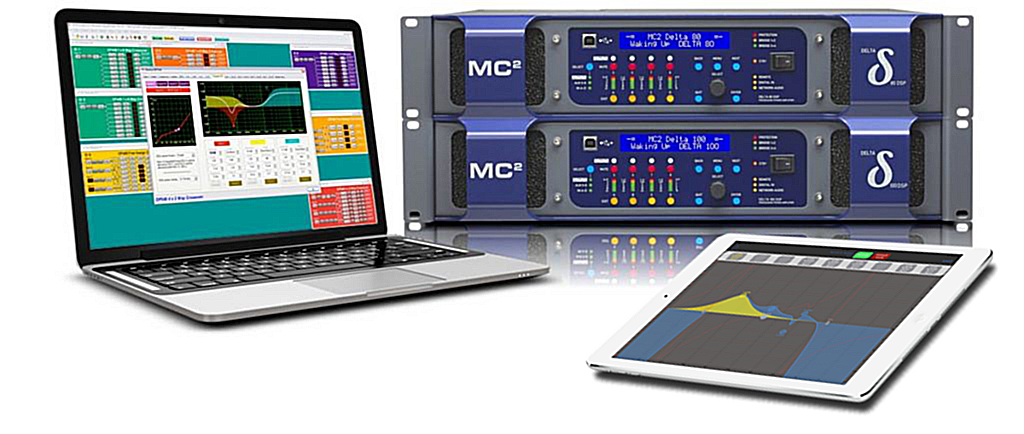
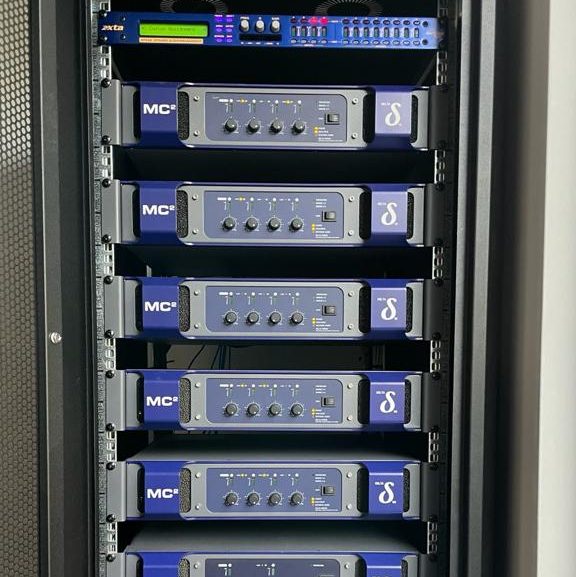
The Delta Series brought together XTA’s processing algorithms with MC²’s amplification in a fully integrated platform, with a optional Dante connectivity card. Its performance led to the installation of over 20 units at the world famous AIR Studios in London, supporting complex monitoring environments including Dolby Atmos.  This then directly contributed to wider adoption across high-end studio facilities worldwide.

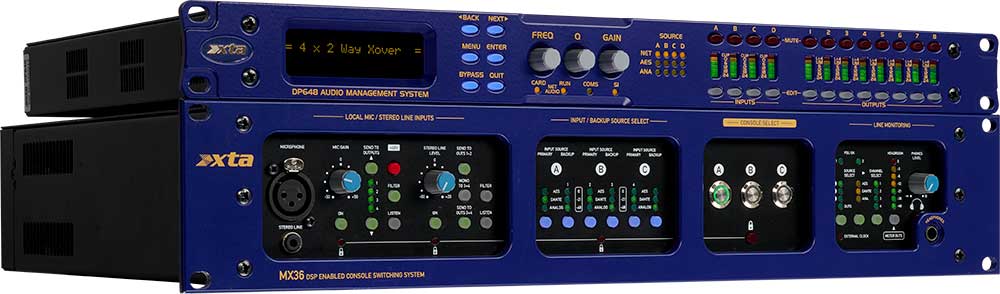
The MX36 Audio Switcher

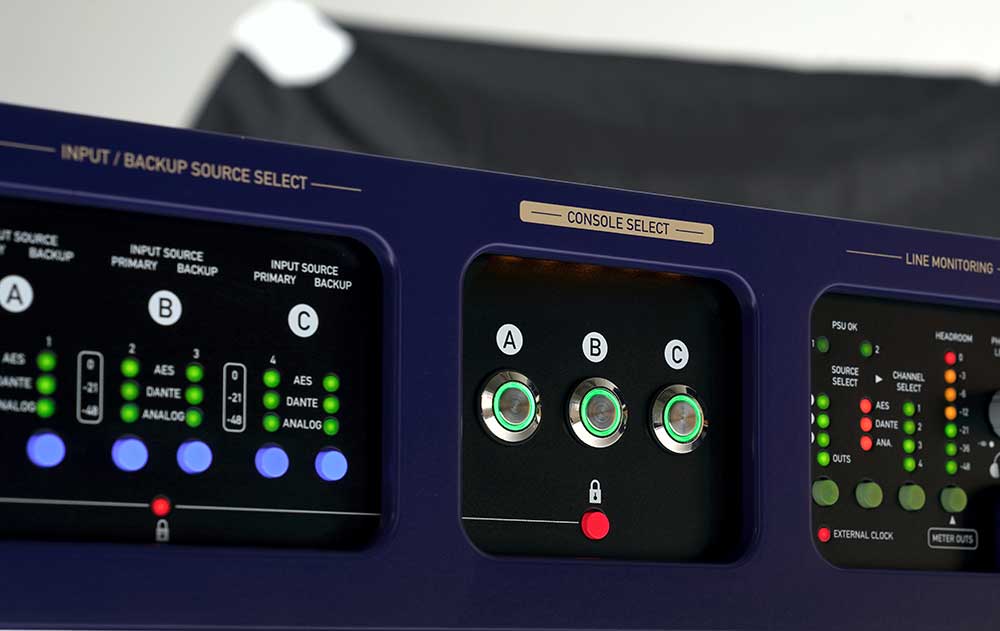
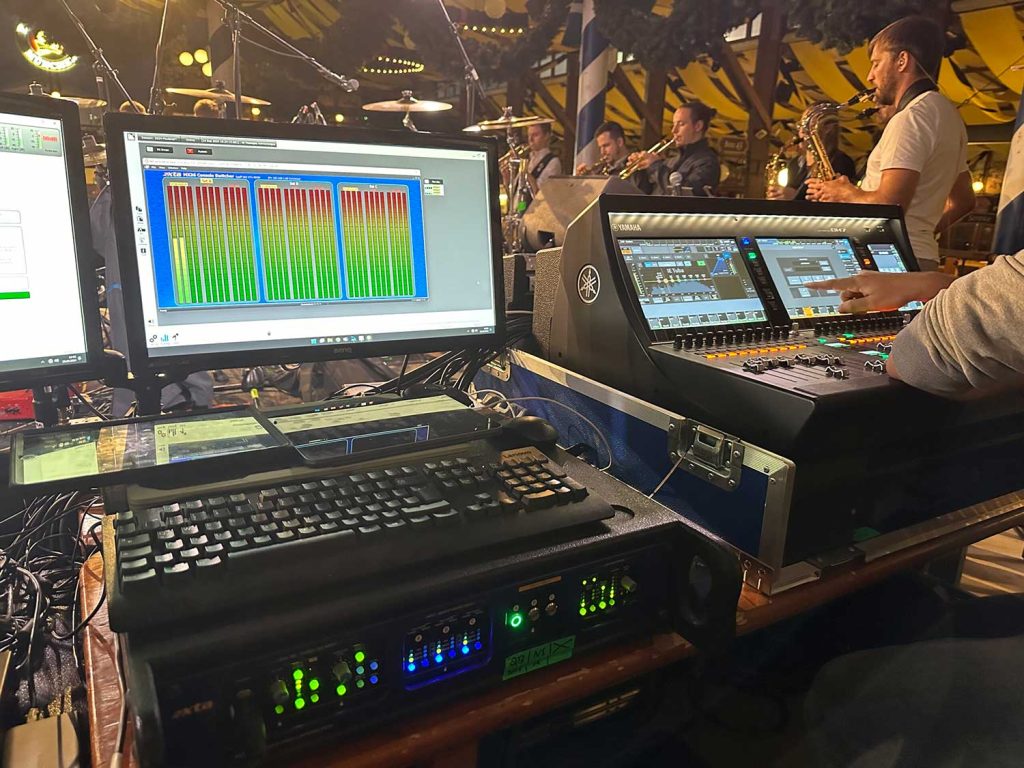
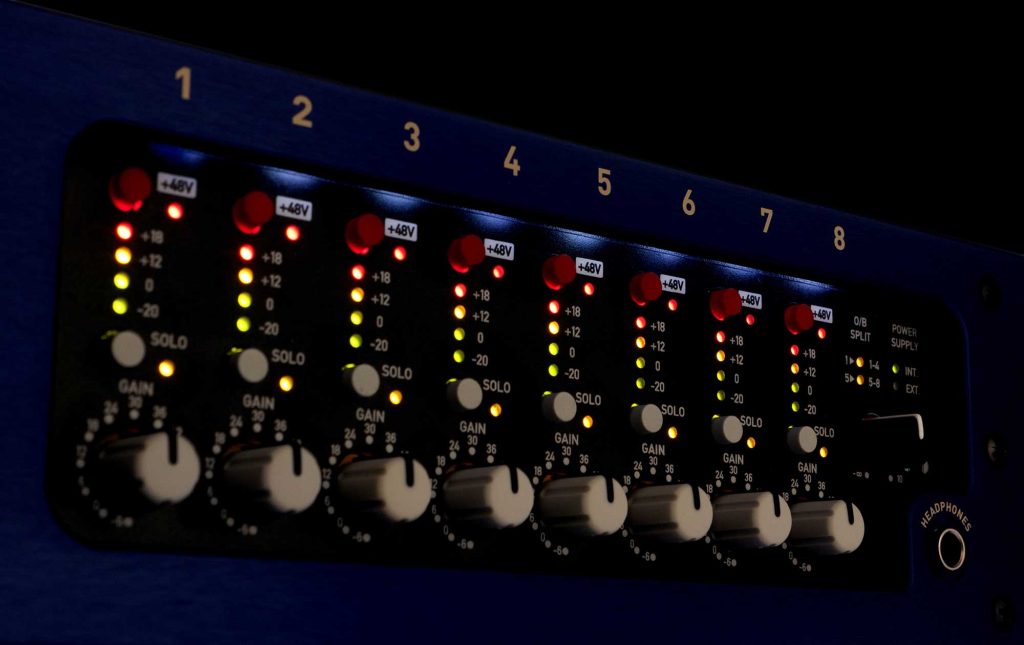
Developed to address the practical challenges of modern touring and festival environments, the MX36 Console Switching System was designed by engineers, for engineers. Supporting 43 inputs across analogue, AES, and Dante networks, it enables seamless switching between multiple front-of-house consoles, with automatic failover and built-in redundancy. In doing so, it removed the need for complex, over-specified processing systems and quickly became a widely used solution among global touring providers. Today, the MX36 continues to play a broader role in system design, offering expanded input management, control, and flexibility when used alongside XTA processors and DSP-enabled amplification.

Ultrafide Audio

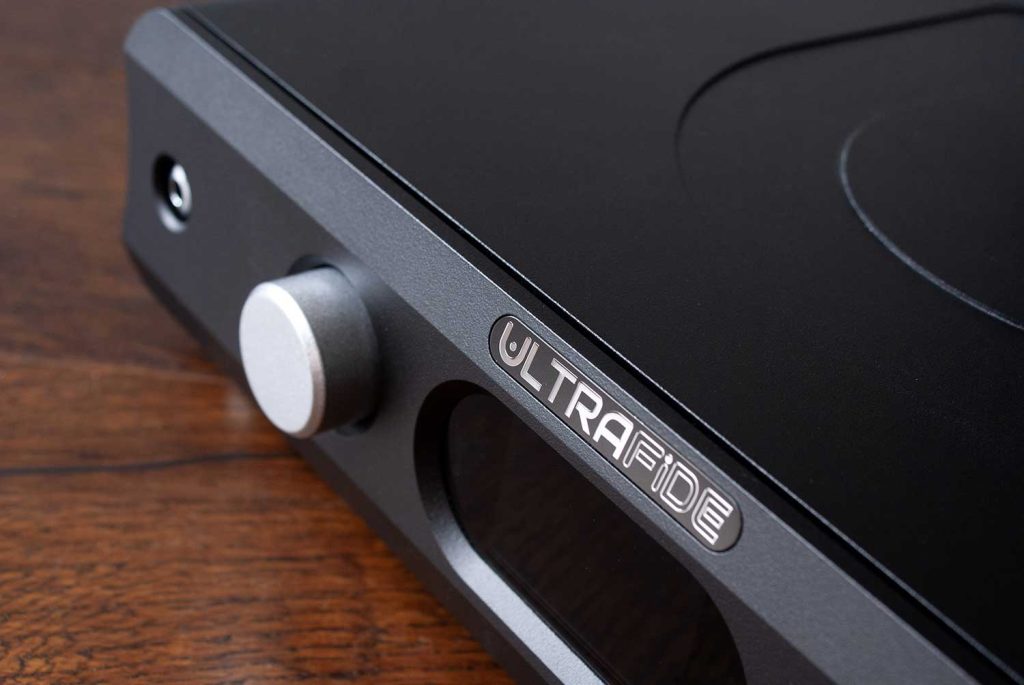
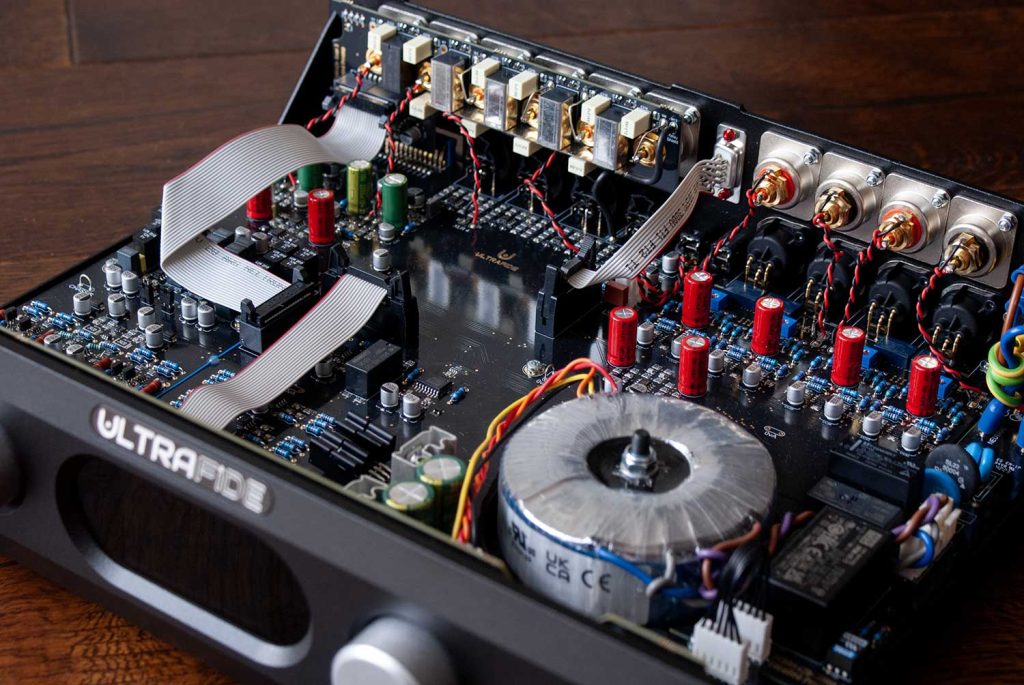
Following three years of focused research and development – and growing demand for XTA and MC² sound beyond professional environments – Ultrafide Audio was launched as a dedicated Hi-Fi brand.

It brings the same design approach and sonic philosophy into the home, extending professional-grade performance into domestic listening spaces.  The brands strapline “Pro Sound Homebound” sums up the offering perfectly!

SIX

In 2025 “SIX” was introduced with the debut product in the range, the flagship DP648 – A multi-format, audiophile grade DSP.

Six is a truly flexible system processor with next level sound.  A combination of the best features from our legacy processors and DELTA/DPA amplifiers.  Using decades of digital signal processing knowhow & engineering expertise, use cases for Six extend well beyond traditional live sound duties.  Partnering with our game-changing MX36 opens new doors for total flexibility and signal distribution/management.

Live, Tour, Studio, Install – It does it all, in true high definition sound.

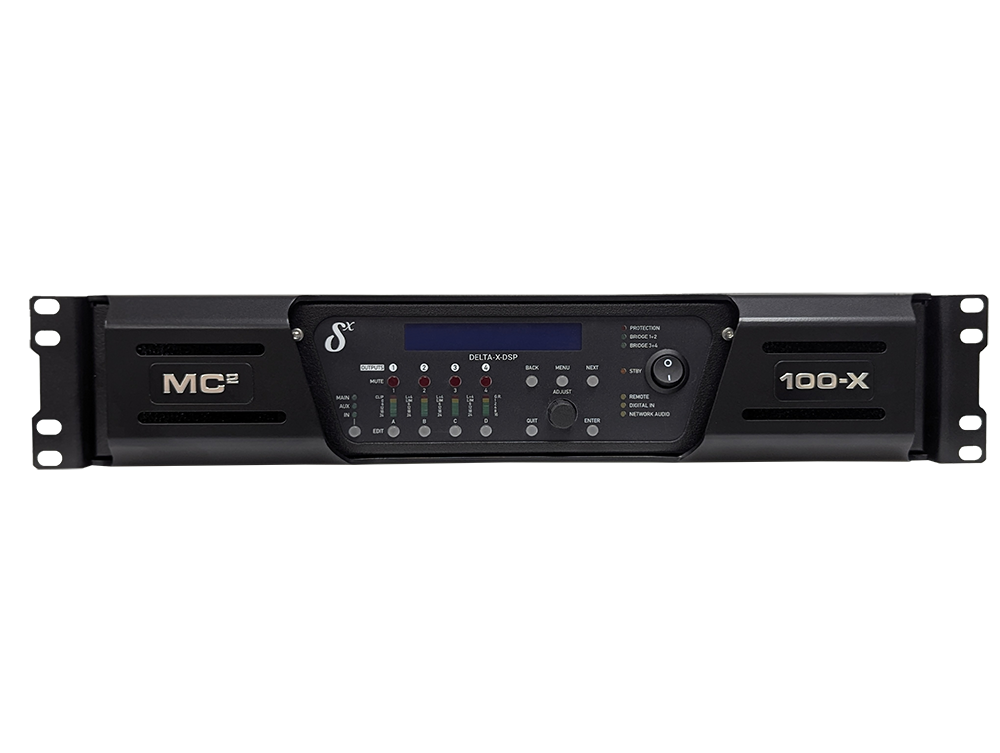
Delta-X

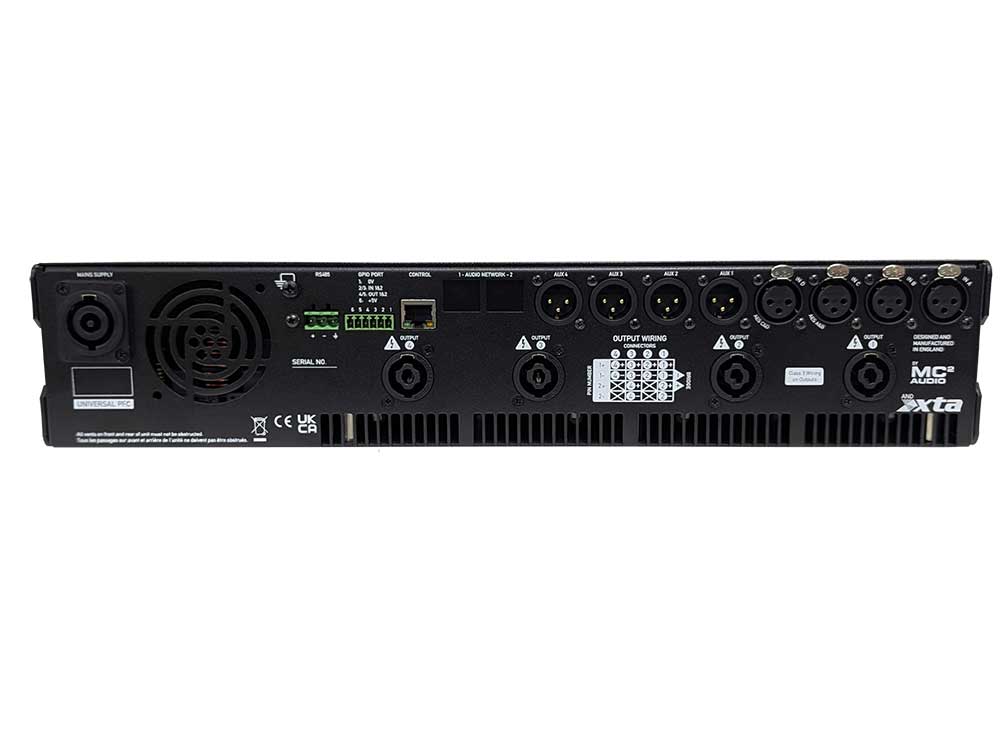
ISE 2026 (Barcelona) saw the worldwide “soft launch” of our next generation Delta-X high-resolution amplifier platform, building on the total success of our 2017 launched Delta/DPA Series.

Not just amps. Not just processing. Combining the two is just the beginning…

Featuring a brand new universal PFC (Power Factor Corrected) PSU, updated firmware and features, and new voltage rail management circuitry, Delta-X improves your Power, Process, & Control even more!

DP226 - Defining DSP in Pro Audio

The Start:  Before the DP226, FOH and system engineers relied on large, heavy drive racks. Managing a system required separate pieces of analogue outboard for each function – graphic EQs, parametric EQs, crossovers, compressors/limiters, and analogue delay lines. The DP226 changed everything by introducing a far more streamlined approach:

Total Combination:  It brought high-pass and low-pass filtering, variable delays, extensive parametric EQ, and sophisticated limiting together within a single 1U digital rack unit – setting a new benchmark for system integration and efficiency.

Uncompromising Audio Quality:  Early digital equipment was often criticised for sounding cold or clinical, largely due to poor conversion design and component choices. The DP226 challenged that perception, featuring a high-quality internal data path and a dynamic range exceeding 110dB. The result was exceptional sonic purity – trusted by leading engineers worldwide, often in place of high-end analogue gear, and specified on top-tier productions. XTA brought audiophile-grade sound into the pro audio world.

Line Arrays:  With the introduction of L’Acoustics’ V-DOSC system – which effectively defined the modern line array – the DP226 was selected as the system processor, complete with official presets, and shipped with every system. It became, quite literally, the “brain” of the line array revolution. Its 2-in/6-out configuration allowed engineers to divide systems into multiple zones (short, medium, and long-throw, for example), applying precise EQ and delay to ensure consistent coverage from front to back.

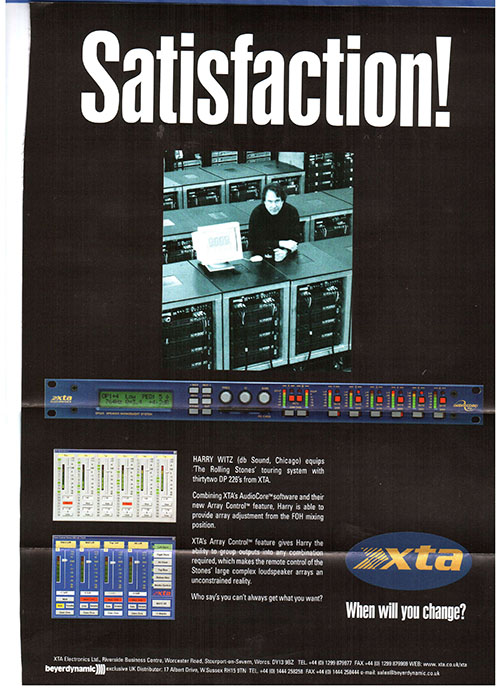
Software Control:  Engineers could link multiple DP226 units via RS485 and control them remotely from a laptop using XTA’s AudioCore software – establishing a workflow that has since become the blueprint for modern PA system tuning and control. Because the DP226 sat at the heart of systems such as V-DOSC and Martin Audio’s W8L, it featured on virtually every major global tour throughout the early 2000s. Artists including The Rolling Stones, Take That, and Kylie Minogue relied on systems powered by it – demonstrating its capability at the very highest level. Major global rental houses built entire touring inventories around DP226-driven racks. Even today, while largely replaced on top-tier stadium tours by newer systems and integrated DSP amplifiers, working units can still be found in venues and rental stock worldwide – continuing to deliver, and refusing to be retired.

Trusted in the Real World

Our equipment is used in places where failure isn’t an option.

XTA and MC² have long been a staple at the world’s most famous greenfield festival. Over the years, our equipment has powered multiple key areas, including the Acoustic Stage, West Holts, and the Glade Stage.

In 2007, we supplied all amplification and loudspeaker processing for the Pyramid Stage, working alongside Funktion-One and Audio Plus UK.

The Glade – known for its demanding electronic music programme – has continued to utilise DSP-enabled amplification to deliver precise control and high-output performance in a challenging outdoor environment.

For many years, Space Ibiza – widely regarded as one of the most influential electronic music venues – relied on the combined performance of XTA and MC².

Custom Funktion-One systems were powered by MC² amplification and managed by XTA processing, delivering consistent performance in a high-pressure, high-humidity environment where systems operated for extended periods at full output.

Founded by George Martin, AIR Studios is one of the world’s most respected recording and scoring facilities. In 2018, the studio upgraded its monitoring infrastructure, installing over 20 MC² Delta Series amplifiers, alongside additional T Series units.

Having previously used XTA processing, the move to Delta was a natural progression – combining amplification and DSP within a single platform. Paired with dynaudioacoustics M-Series loudspeakers by Munro Acoustics, the system has become a reference point for high-end studio monitoring, particularly in complex environments such as Dolby Atmos.

For an event of this scale, reliability is critical. MC² amplification was selected to deliver stadium-wide audio at the Volgograd Arena, powering Funktion-One loudspeaker systems.

The system was required to maintain clarity across a capacity crowd of 45,000 – supporting both live commentary and emergency voice alarm (EVA) systems without compromise.

Few environments are more demanding than a desert. At the Monegros Desert Festival, a 24-hour electronic music event, MC² amplifiers have been deployed across multiple large-scale stages.

Operating in extreme heat, dust, and continuous high-output conditions, the systems have delivered consistent performance throughout.

While amplifiers power live environments, XTA’s DS8000 Audio Distribution System has become a key part of major broadcast workflows.

With a Common Mode Rejection Ratio (CMRR) of 120dB and dual redundant power supplies, it is widely used for splitting microphone signals between front-of-house, monitor engineers, and broadcast feeds. Across large-scale live television and radio productions, it provides a reliable backbone for signal distribution.

XTA processors have been supplied to NASA for use in specialist testing facilities. In these environments, DSP is used to shape audio projected through large-scale horn systems, simulating the extreme sound pressure levels generated during rocket launches.

XTA and MC² systems are also used in permanent installations, such as the Audio Bridge at RMIT University in Melbourne.

This immersive sound installation uses Dante network audio, with a Mac Mini feeding a 16-channel spatial system through XTA processors and MC² amplification. Operating continuously and controlled remotely, it demonstrates the flexibility of the platform in complex, modern audio environments.

These aren’t just highlights – they reflect the environments our products are built for.

How We Work

Designed and built with the same level of care and attention, and individually tested throughout the manufacturing process.

Engineering Approach

Our design philosophy is rooted in practical, experience-led engineering. This includes:

Current-driven floating drive stage technology – a leading Class A/B amplifier design developed by Terry Clarke

UltraSigma modular technology, originally developed for the Ultrafide Hi-Fi range and scaled into the I-Series amplifiers by Alex Cooper

XTA’s industry-recognised digital processing algorithms, widely regarded as “the best in the business” – A benchmark for precision control and unmatched transparency

Amplifier protection systems designed to remain outside the signal path until absolutely necessary, using sophisticated side-chain limiting to preserve transparency while providing effective protection

Industry leading and true originators of DSP-based limiter protection.  Engineered to safeguard loudspeakers while remaining sonically transparent in operation

Built on Experience

With over 30+ years of development and long-standing relationships across our supply chain, we continue to build products that are serviceable, reliable, and designed to last.